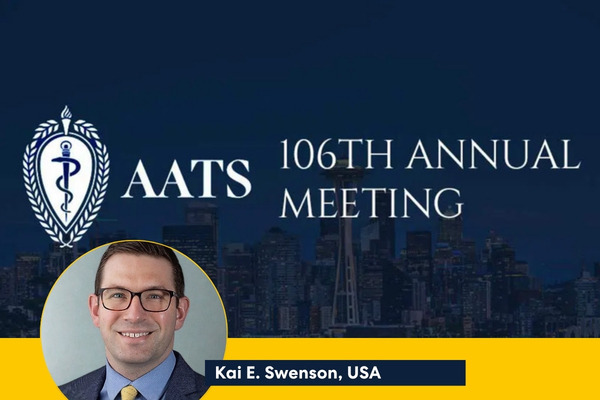
This e-learning module is based on the first presentation from the Medela-sponsored AATS 2026 Symposium, Advances in Air Leak Management and Drainage Systems in Pulmonary, Thoracic and Cardiac Surgery. In this session, Kai E. Swenson, MD (Beth Israel Deaconess Medical Center, Boston, USA) explores the clinical challenges of managing persistent air leaks and the evolving role of digital chest drainage systems in pulmonary care. Learners will examine how real-time, quantitative air leak measurement can support accurate diagnosis, aid bronchoscopic leak localization, guide endobronchial valve placement, and inform treatment decisions. Through clinical case examples, the session demonstrates how objective air leak monitoring can enhance clinical decision-making and improve outcomes for patients with prolonged air leaks. Key learning topics: Challenges associated with the diagnosis and management of persistent air leaks The role of digital chest drainage systems in quantitative air leak measurement Using objective air leak data to support bronchoscopic leak localization How digital monitoring can guide endobronchial valve placement and treatment planning The clinical value of data-driven decision-making in pulmonary air leak management Continue the symposium series: Session 2: Emerging Trends and Clinical Outlook in Drainage and Air Leak Monitoring with Sebastien Gilbert Session 3: Cost-effectiveness of Analog vs. Digital Drainage Systems in Cardiac Surgery with Johannes Petersen Read more
Rating
Content
Price

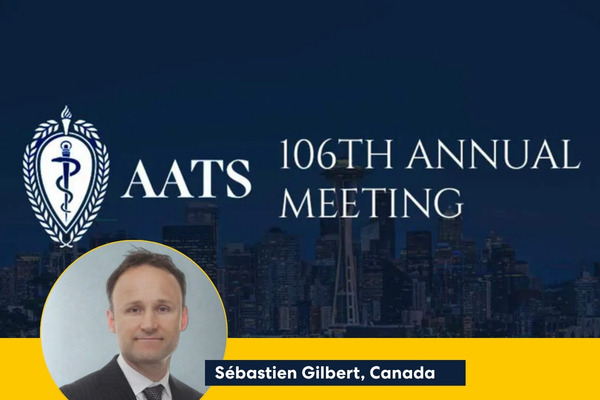
This e-learning module is based on the second presentation from the Medela-sponsored AATS 2026 Symposium, Advances in Air Leak Management and Drainage Systems in Pulmonary, Thoracic and Cardiac Surgery. In this session, Sébastien Gilbert, MD (University of Ottawa, Canada) explores the evolving landscape of chest tube management and the increasing role of digital pleural drainage systems in supporting objective, data-driven clinical decision-making. Learners will examine the evidence behind quantitative air leak monitoring, strategies for safe and efficient chest tube removal, and the value of standardized approaches to pleural drainage management. The session also looks ahead to future innovations, including artificial intelligence-powered clinical decision support tools, and considers how these technologies may help extend expert-level care beyond specialized centres while improving patient outcomes and operational efficiency. Key learning topics: The evolution of chest tube management from subjective assessment to data-driven decision-making Clinical evidence supporting quantitative air leak monitoring Strategies for safe and efficient chest tube removal The role of standardized pleural drainage pathways in improving patient care Emerging innovations, including AI-powered clinical decision support tools for pleural space management Continue the symposium series: Session 1: Clinical Applications of Endobronchial Valves and Digital Air Leak Measurement in Pulmonary Care with Kai E. Swenson Session 3: Cost-effectiveness of Analog vs. Digital Drainage Systems in Cardiac Surgery with Johannes Petersen Read more
Rating
Content
Price
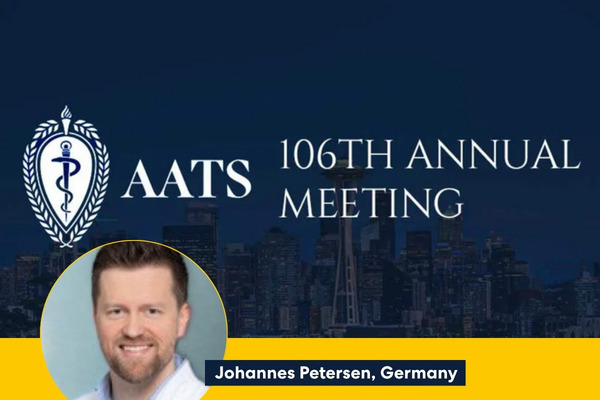
This e-learning module is based on the third presentation from the Medela-sponsored AATS 2026 Symposium, Advances in Air Leak Management and Drainage Systems in Pulmonary, Thoracic and Cardiac Surgery. In this session, Johannes Petersen, MD (University Medical Center Hamburg-Eppendorf, Germany) examines the clinical and economic impact of chest drainage management within modern cardiac and thoracic surgery pathways. Learners will explore the evidence supporting digital drainage systems and their role in Enhanced Recovery After Surgery (ERAS) programmes, including their potential to reduce drainage-related complications, optimize resource utilization, and contribute to shorter ICU and hospital stays. The session also reviews health-economic data comparing analog and digital drainage systems, highlighting how investments in digital technology may be offset by improvements in patient outcomes, workflow efficiency, and overall cost-effectiveness. Key learning topics: The clinical impact of chest drainage management in cardiac and thoracic surgery The role of digital drainage systems in supporting ERAS principles Strategies to reduce drainage-related complications and optimize resource utilization Health-economic considerations when comparing analog and digital drainage systems The relationship between clinical outcomes, workflow efficiency, and cost-effectiveness Continue the symposium series: Session 1: Clinical Applications of Endobronchial Valves and Digital Air Leak Measurement in Pulmonary Care with Kai E. Swenson Session 2: Emerging Trends and Clinical Outlook in Drainage and Air Leak Monitoring with Sébastien Gilbert Read more
Rating
Content
Price
Shopping Cart
Your cart is empty