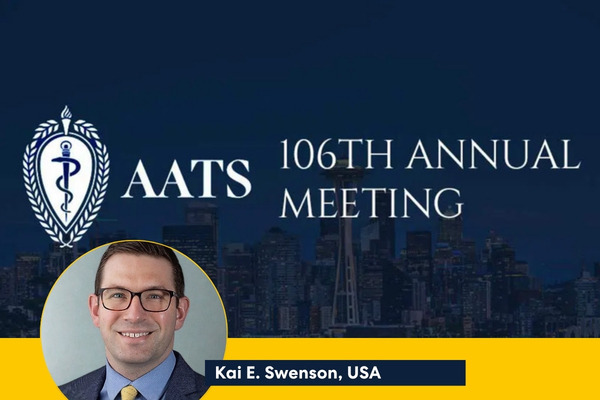
This e-learning module is based on the first presentation from the Medela-sponsored AATS 2026 Symposium, Advances in Air Leak Management and Drainage Systems in Pulmonary, Thoracic and Cardiac Surgery. In this session, Kai E. Swenson, MD (Beth Israel Deaconess Medical Center, Boston, USA) explores the clinical challenges of managing persistent air leaks and the evolving role of digital chest drainage systems in pulmonary care. Learners will examine how real-time, quantitative air leak measurement can support accurate diagnosis, aid bronchoscopic leak localization, guide endobronchial valve placement, and inform treatment decisions. Through clinical case examples, the session demonstrates how objective air leak monitoring can enhance clinical decision-making and improve outcomes for patients with prolonged air leaks. Key learning topics: Challenges associated with the diagnosis and management of persistent air leaks The role of digital chest drainage systems in quantitative air leak measurement Using objective air leak data to support bronchoscopic leak localization How digital monitoring can guide endobronchial valve placement and treatment planning The clinical value of data-driven decision-making in pulmonary air leak management Continue the symposium series: Session 2: Emerging Trends and Clinical Outlook in Drainage and Air Leak Monitoring with Sebastien Gilbert Session 3: Cost-effectiveness of Analog vs. Digital Drainage Systems in Cardiac Surgery with Johannes Petersen Read more
Rating
Content
Price

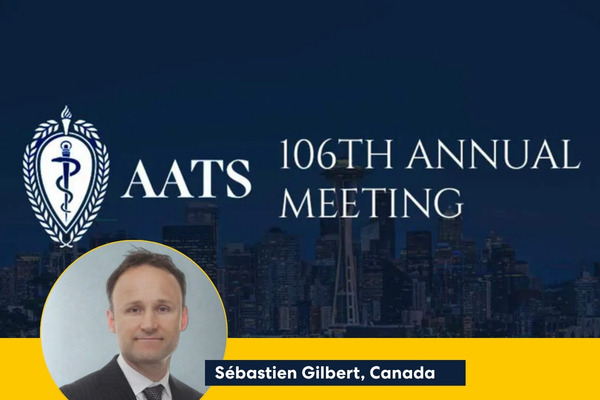
This e-learning module is based on the second presentation from the Medela-sponsored AATS 2026 Symposium, Advances in Air Leak Management and Drainage Systems in Pulmonary, Thoracic and Cardiac Surgery. In this session, Sébastien Gilbert, MD (University of Ottawa, Canada) explores the evolving landscape of chest tube management and the increasing role of digital pleural drainage systems in supporting objective, data-driven clinical decision-making. Learners will examine the evidence behind quantitative air leak monitoring, strategies for safe and efficient chest tube removal, and the value of standardized approaches to pleural drainage management. The session also looks ahead to future innovations, including artificial intelligence-powered clinical decision support tools, and considers how these technologies may help extend expert-level care beyond specialized centres while improving patient outcomes and operational efficiency. Key learning topics: The evolution of chest tube management from subjective assessment to data-driven decision-making Clinical evidence supporting quantitative air leak monitoring Strategies for safe and efficient chest tube removal The role of standardized pleural drainage pathways in improving patient care Emerging innovations, including AI-powered clinical decision support tools for pleural space management Continue the symposium series: Session 1: Clinical Applications of Endobronchial Valves and Digital Air Leak Measurement in Pulmonary Care with Kai E. Swenson Session 3: Cost-effectiveness of Analog vs. Digital Drainage Systems in Cardiac Surgery with Johannes Petersen Read more
Rating
Content
Price
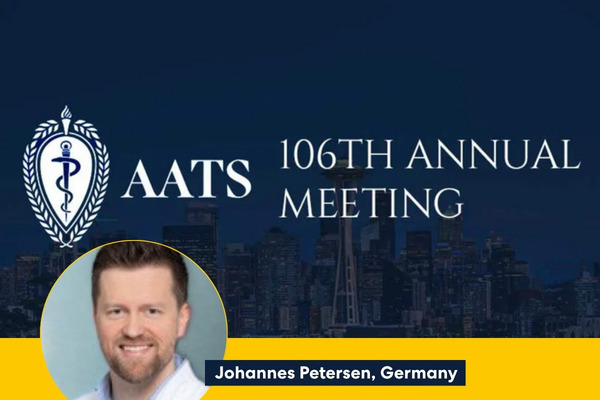
This e-learning module is based on the third presentation from the Medela-sponsored AATS 2026 Symposium, Advances in Air Leak Management and Drainage Systems in Pulmonary, Thoracic and Cardiac Surgery. In this session, Johannes Petersen, MD (University Medical Center Hamburg-Eppendorf, Germany) examines the clinical and economic impact of chest drainage management within modern cardiac and thoracic surgery pathways. Learners will explore the evidence supporting digital drainage systems and their role in Enhanced Recovery After Surgery (ERAS) programmes, including their potential to reduce drainage-related complications, optimize resource utilization, and contribute to shorter ICU and hospital stays. The session also reviews health-economic data comparing analog and digital drainage systems, highlighting how investments in digital technology may be offset by improvements in patient outcomes, workflow efficiency, and overall cost-effectiveness. Key learning topics: The clinical impact of chest drainage management in cardiac and thoracic surgery The role of digital drainage systems in supporting ERAS principles Strategies to reduce drainage-related complications and optimize resource utilization Health-economic considerations when comparing analog and digital drainage systems The relationship between clinical outcomes, workflow efficiency, and cost-effectiveness Continue the symposium series: Session 1: Clinical Applications of Endobronchial Valves and Digital Air Leak Measurement in Pulmonary Care with Kai E. Swenson Session 2: Emerging Trends and Clinical Outlook in Drainage and Air Leak Monitoring with Sébastien Gilbert Read more
Rating
Content
Price

There are many challenges associated with patients requiring chest drainage. This 3 lesson course gives an introduction to the use of a digital chest drainage system. It explains the risks associated with traditional drains, the key factors in implementing change in practice and ways to justify changing to a digital chest drainage system. Presenter Ian Naldrett Associate Director of Nursing at North Middlesex University Hospital - Responsible for Surgery Anesthetics and Critical Care (UK) Read more
Rating
Content
Price

Welcome to the Chest Drain Management module, which examines what is a chest drain, where and why this is used along with different chest drainage systems. This course provides an excellent introduction to understanding and managing chest drainage. This course is available in English, German, French, Italian, Dutch and Spanish (click on the link for the language to access). Please click on all + signs that you see in the course. Please click on all visual cards that ask you to "flip" them. You will not be able to advance to the next section unless you do and answer any questions in that section. There will be a some questions at the end of some sections of the training to check for comprehension. Good luck and enjoy the course. Your Medela University Team Please follow the below instructions to get to and complete the training course: Click the "Add" button to transfer your preferred course to your shopping cart. Click the "Proceed to Cart" button to check out. If you are a returning user, log-in with your personal log-in credentials. If you are a new user, please click on "Create an Account". By signing up you agree to our Data Protection Information. Back in your shopping cart, click on "Next Step Check Out". Return to dashboard to start your course. This course is CPD (Continuing Professional Development) certified. This course is also endorsed by EfCCNa (European federation of Critical Care Nursing associations. Read more
Rating
Content
Price

ERAS (Enhanced Recovery After Surgery) programs have become one of the cornerstones in the perioperative management of our patients. Although their benefit in terms of reducing complications and hospital stays is beyond doubt, they have not been routinely implemented in many Thoracic Surgery Departments yet. This course highlights its importance, with special focus on the management of chest drains and scientific evidence behind our recommendations. Two outstanding speakers and two renowned chairs who will lead the discussion towards the most controversial aspects. Presenters Dr. Josep Belda Professor of Surgery, Autonomous University of Barcelona; Thoracic Surgeon and Scientific Coordinator of the Thoracic Surgery Department, Hospital de la Santa Creu i Sant Pau, Spain Dr. Miguel Congregado MD, PhD, FEBTS General Thoracic Surgeon, Head of Department of Thoracic Surgery, Quironsalud Infanta Luisa Hospital; Innovation Coordinator of General Thoracic Surgery, Virgen del Rocio University Hospital, Spain Dr. Santiago Figueroa Thoracic Surgeon, Clinical University Hospital of Valencia, Chair, Teaching Committee, Spanish Society of Thoracic Surgery (SECT), Spain Dr. María Teresa Gómez MD, PhD Consultant Thoracic Surgeon, Department of Thoracic Surgery, Salamanca University Hospital; Associate Professor, Department of Surgery, University of Salamanca, Spain Read more
Rating
Content
Price
Shopping Cart
Your cart is empty